By Aaron Ting
I'm conflicted. DC Comics has published a shiny new hardcover representing a bold path that I've been waiting for DC to embark on for years. It began with Marvel's
Ultimate Spider-Man, a book series that set out to re-envision Spider-Man's origin story and early days (and an inspiration for the upcoming 2012 reboot movie). The series was an incredible success, taking everything great about the character and presenting it with a fresh, contemporary approach. Best of all, you didn't need to know anything about Spider-Man to read the series - the story ran completely separate from the rest of Spider-Man's forty-year history. I wanted Superman to be that approachable again.
For years, I watched DC characters like Superman slip into greater cultural irrelevance as Marvel enjoyed the fruits of a long string of highly successful film adaptations. Like Spider-Man, I felt Superman would need to be reimagined in comics before he could be successfully reintroduced to film. Bryan Singer's
Superman Returns, while a very respectful movie, revealed the danger of dramatically disrespecting Superman's goodness...by making him a creepy stalker and a neglectful father.
Superman Returns had some cool imagery though.
I was thrilled when DC Comics announced the
Earth One line - a line of direct-to-bookstore graphic novels that would provide contemporary reimaginings of their most popular characters. Building my anticipation was the news that DC had selected J. Michael Straczynski to write the book. Straczynski is a top-notch science fiction writer whose writing I was most familiar with through his television work and excellent run on
Spider-Man. I was psyched.

But having read the book, my enthusiasm has been thoroughly washed away with conflicted apprehension. On the one hand,
Superman: Earth One succeeds at retelling the origins of the character in a modern setting. Moreover, it's clear that Straczynski has devoted a great deal of thought to some of the classic ideas in the Superman mythos. Unfortunately, in trying to make Superman relatable to a new generation of readers, I feel Straczynski really failed to capture the point of the character.
To make Superman relatable, Straczynski had to turn him into the type of protagonist that is completely dominating our storytelling right now: a sensitive hipster with a soft personality, great hidden strength, and a relative fear of taking action (see
500 Days,
Kick-Ass, and literally every Michael Cera and Jesse Eisenberg movie ever made). The problem is that while this archetype is generally endearing and relatable, it just isn't Superman.
The reason why so many Superman projects fail is because the creators fail to understand the character and the role he serves in human mythology. His personality
isn't supposed to be relatable. He's a science fiction messiah sent down from another planet, raised by kind simpletons to be a virtuous, unbending symbol of hope.
That isn't relatable.

It's like going through the Bible and trying to relate to Jesus - there are certain ideas and archetypes that you're not
supposed to be able to relate to - and that's why they exist. As a character, Superman is meant to inspire because both his moral and physical qualities are so completely extraordinary that we could only hope to be like him in our wildest imaginations - which is why children grasp the idea of the character much more easily than adults.
You can relate with Clark Kent, the bumbling oaf who just can't get the pretty girl's attention. You can relate with Lois Lane, the skeptical reporter who is completely awe-struck by the arrival of someone so powerful and pure of heart that she sets out to learn everything about him. You can relate with Jimmy Olsen, the nerdy photographer whose biggest thrill is that the world's greatest hero knows his name.
But you can't relate with Superman. And more importantly, you can't set out to make Superman relatable, because
Superman: Earth One is exactly what will happen. At best, you'll have an expertly-told story about a character who at no point ever feels like the hero he could and
should be. A hero who is so incredibly powerful, but so unnecessarily insecure about himself that he can't just step up and do the right thing when people need him...and instead, spends several comic panels brooding across Metropolis, complaining about how difficult his life has become.
Again, I truly wanted to love
Superman: Earth One. I still have a profound respect for the writer and I'm terribly impressed with the risk that DC was willing to take to put this hardcover on the shelves. It's a well-told story, but it isn't the Superman story. Superman is a touchstone of American mythology, and while myths will be retold and reimagined over and over again, successful retellings only work if they are able to capture the idea of the character - in this case, the messiah-like symbol of hope.
Earth One just doesn't do that.

If you want to know the difference - if you want to know how an out-of-date ideal like Superman can be successfully reborn in a modern world, read Geoff Johns'
Superman: Secret Origin when it hits bookstores in hardcover this December. It tells the story of an uncertain man moving to a hostile city and trying to realize his mission in life. It beautifully captures the heroic value of Superman and shows why his cornball goodness is more important than ever (it also gives a respectful nod to Christopher Reeve's portrayal). As I fearfully await Zach Snyder's rebooted Superman films, I desperately hope he looks at
Secret Origin and leaves
Earth One on the shelf.
Bottom line, Superman writers need to stop worrying about making Superman relatable and just focus on telling a good, fun Superman story. It's not about leaving your mark on the character - it's about respectfully servicing a legend for a new generation.


 But having read the book, my enthusiasm has been thoroughly washed away with conflicted apprehension. On the one hand, Superman: Earth One succeeds at retelling the origins of the character in a modern setting. Moreover, it's clear that Straczynski has devoted a great deal of thought to some of the classic ideas in the Superman mythos. Unfortunately, in trying to make Superman relatable to a new generation of readers, I feel Straczynski really failed to capture the point of the character.
 It's like going through the Bible and trying to relate to Jesus - there are certain ideas and archetypes that you're not supposed to be able to relate to - and that's why they exist. As a character, Superman is meant to inspire because both his moral and physical qualities are so completely extraordinary that we could only hope to be like him in our wildest imaginations - which is why children grasp the idea of the character much more easily than adults.
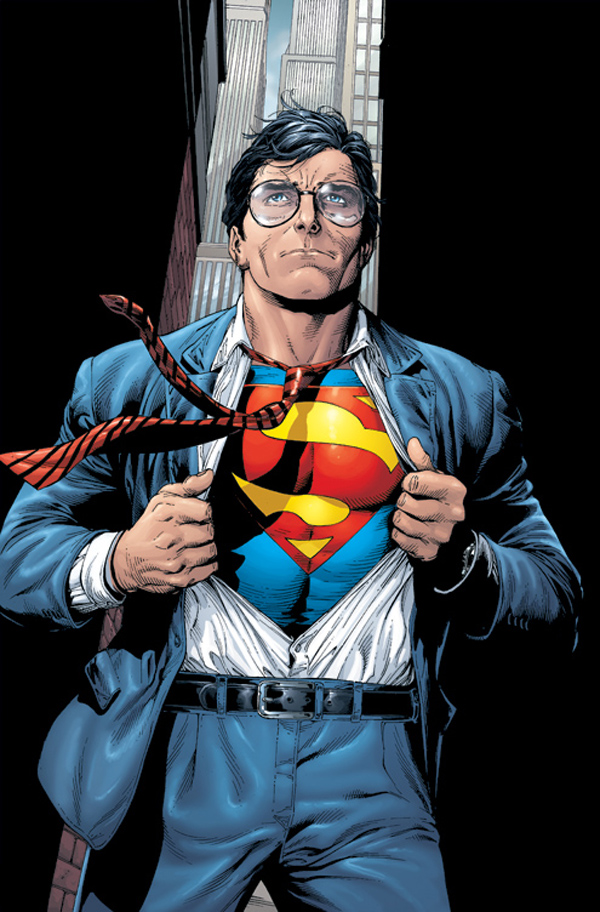 If you want to know the difference - if you want to know how an out-of-date ideal like Superman can be successfully reborn in a modern world, read Geoff Johns' Superman: Secret Origin when it hits bookstores in hardcover this December. It tells the story of an uncertain man moving to a hostile city and trying to realize his mission in life. It beautifully captures the heroic value of Superman and shows why his cornball goodness is more important than ever (it also gives a respectful nod to Christopher Reeve's portrayal). As I fearfully await Zach Snyder's rebooted Superman films, I desperately hope he looks at Secret Origin and leaves Earth One on the shelf.


 Posts
Posts

